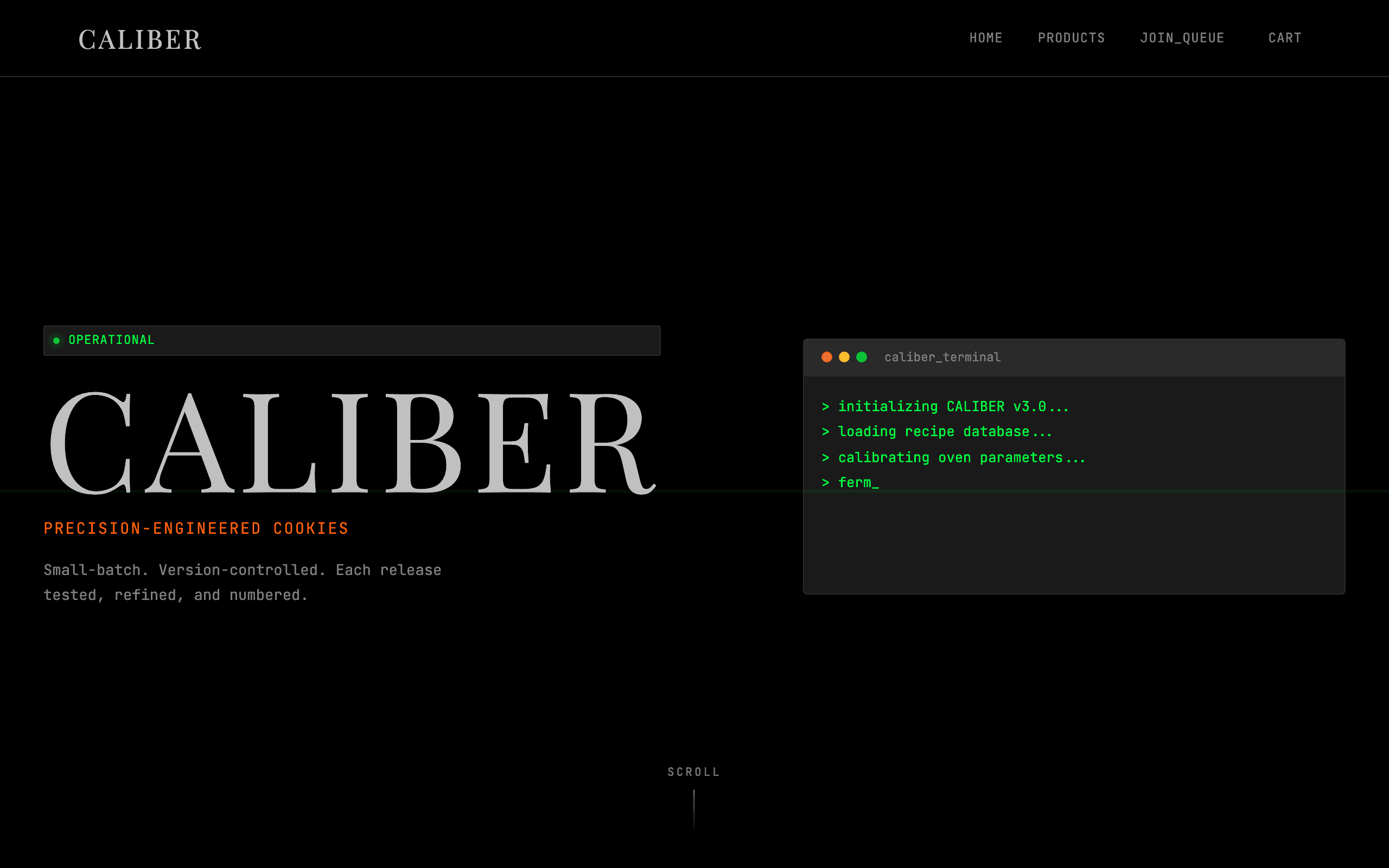
CALIBER
A craft cookie company structured like a software project. Every release is a versioned bundle, every purchase earns tokens in a five-tier system, and a community vote decides which beta gets promoted to main. The web storefront and a React Native companion app share a Supabase backend and mint an on-chain certificate of authenticity for each bundle on Base.
Overview
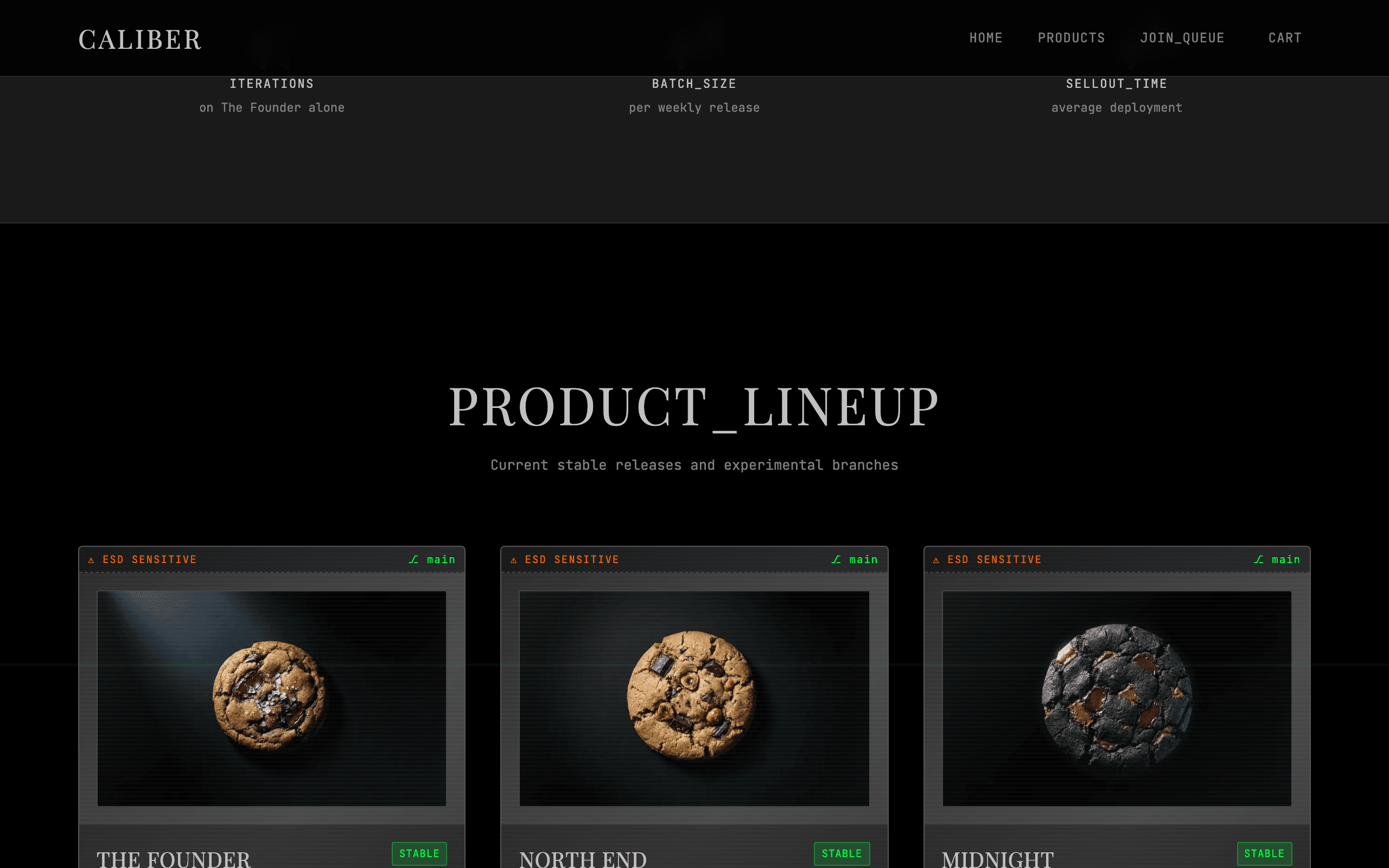
Most DTC food brands pretend the supply chain doesn't exist. CALIBER does the opposite. Every cookie has a version, a changelog, and a branch (STABLE or BETA). Customers buy bundles (THE_BUILD or THE_FULL_STACK), not individual cookies; the bundle composition is its own release. The framing started as a joke between me and the founder. It earned its keep when we realized our actual problem (small kitchen, real iteration, opinionated customers) had already been solved in software.
Approach
Web is Next 15 App Router with the Shopify Storefront API as inventory truth and a Supabase layer for everything Shopify can't model (token ledger, tier membership, voting weights, beta flags). Auth is NextAuth v5 with Resend magic links; the buyer demographic won't tolerate password forms. The mobile app is Expo with Zustand and NativeWind, sharing the same Supabase backend, and adds Cookie Crumble: a small game that earns CRUMBS for the tier system. Certificates of authenticity are ERC-721s on Base via Viem, opt-in at checkout, free. A paid cert would defeat the point.
Outcome
Live at caliber-site.vercel.app in private beta with a queue. Three bundle releases have shipped. Cookie Crumble retention is high enough to be load-bearing: people come back daily to earn CRUMBS, which we wanted but didn't bank on. NFT cert opt-in is lower than expected, which is fine. The people who care really care. The tier system is doing the work of customer segmentation without any explicit cohorting on our part.
Reflections
The version-control framing isn't a marketing hook. It's the actual structure of the operation. We can talk through a recipe iteration with customers because they think in branches now too. If I were doing it again I'd ship the mobile app sooner. The web checkout had to exist first, but once the game was in customers' pockets the engagement curve looked completely different.